|
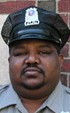
Not shown: Gary Gogel, Vice President
Which workers here get paid the least?
Job Hourly wage after a year’s service
Custodian $ 18.98
Grill cook $ 18.91 + meals = $20.38
Museum security $ 14.40 + extra sick time = $14.88
Parking security $ 14.40 + extra sick time = $14.88
The Harvard University Security, Parking and Museum Guards Union represents the lowest-paid workforce on campus. You can help us get better wages by signing our petition to Labor Relations.
HUSPMGU (sometimes pronounced husp-mu-goo) was founded by the University’s own employees as an unaffiliated, independent union.
Before 1996, the security workers were represented by the custodians union, Service Employees Local 254 (later renamed Local 615). Labor Relations gives some of the history at Campus Unions: HUSPMGU.
Management resisted our campaign to unite all security workers into a single bargaining unit, but in 1996 we won a representation election held by the National Labor Relations Board. The NLRB determined that the Harvard University Security, Parking and Museum Guards Union had the support of a majority of the workers in the unit; so we qualified to represent those workers. We negotiated our first contract in July 1999, after three years of bargaining.
“The University recognizes the Union as the exclusive representative … for … hourly paid … Guards, Museum Attendants, Central Station Monitors, Parking Service Monitors.” Agreement (1999; 2003; 2006; 2010).
| We tried affiliating with a parent union, the International Brotherhood of Police Officers. As of January 1, 2010, we’ve gone independent again, and we’ve brought back the negotiator who got us through a hard-fought organizing effort against determined and resourceful adversaries. Labor-relations lawyer Randy Nash is representing us in the arbitration of the terms to be included in the 2013 contract. |
|
|
|
|
|
|
 |
Soon after Harvard and HUSPMGU agreed on the 1999 contract, we established constructive relationships with management at Art Museums and at Parking Services. A typical grievance resolution: Art Museums agreed to restore a past practice of letting attendants who work in non-airconditioned buildings wear traditional lightweight cotton uniforms during the summer.
But management at Police & Security categorically refused to discuss any of our members’ complaints. Management’s view of the union is presented in the Final Report of the Harvard Committee on Employment & Contracting Policies (2001), Sec. II, Findings of Fact. In 2003 Labor Relations informed us that our members had more unresolved grievances outstanding than all other unions’ combined.
Before July 1999, each House Master decided whether the College would assign their House a union-represented University Security Guard employed by Harvard or a security officer employed by a contract agency. Masters invariably chose union guards. And they expected that guards would dedicate their careers to serving the residents of their Houses.
Students often acknowledged the guards’ contributions to resolving problems and maintaining House spirit. “The Upperclass Houses: Kirkland House … Perhaps the glue of the house community is security guard Bob Butler, a living encyclopedia of everything from ’60s pop … to birthdays.… And don’t let Bob’s gruff demeanor fool you — he cares a lot more than he lets on.” Harvard Student Agencies, Unofficial Guide to Life at Harvard (25th ed. 2004).
Yet three weeks before our first contract ended, management proposed that the University Security Guard operation be shut down. All security-guard services would be provided by contract vendors. Any security guard who wanted to stay would have to quit the union.
At Mather House, twelve staff members responsible for residents’ security — masters, tutors, superintendents, and proctors — sent us letters of support protesting the decision.
Management did agree that our union retains the right to represent all security workers employed by the university itself. When Harvard eventually reinstates its policy of hiring its own Harvard University Security Guards, the workers who fill those positions will be represented by HUSPMGU.
1999 contract 2003 bargaining impasse 2003 contract 2006 contract 2010 contract
“Strength in Unity”
|